

Stuart R. Gallant, MD, PhD
Analytical testing is required to verify the identity, strength, quality, purity, and potency of investigational and commercial products. The precise set of tests, as set out in the release specifications [1], is tailored to the type of product, manufacturing process, route of administration, and other factors. Once the release specifications have been set, a pharmaceutical project team must find an analytical laboratory to execute the testing and report the results. Today’s post discusses the process of selecting and working with an analytical laboratory.
Laboratory Location and Relationship
As you think about project fit, there are a number of factors to consider; the first is location:
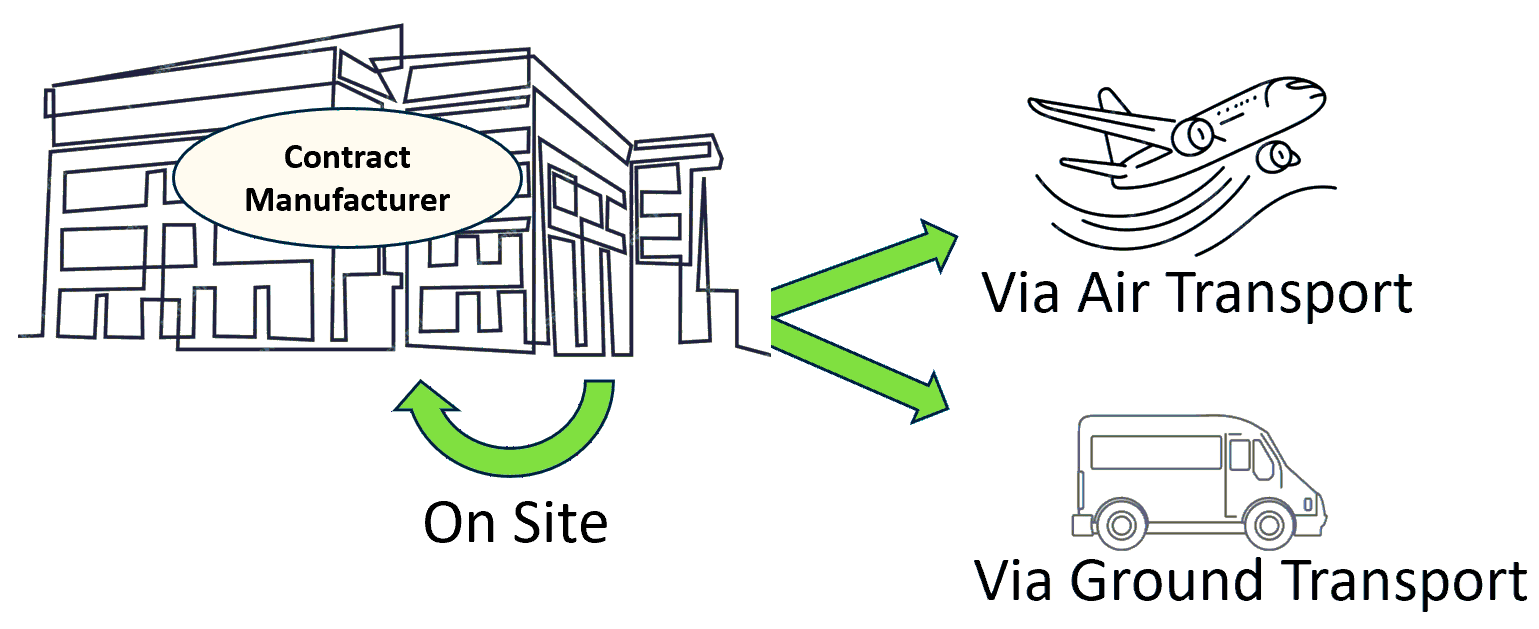
Is the analytical laboratory on-site or remote from the manufacturing facility? Remote sites require additional management effort and delay, as well as risk of sample loss. That might make you want to say, “I want to go with the on-site lab,” but the question is more complex. Other factors include:
- Expertise: The client wants to have experts who know their product molecule intimately. That type of knowledge is amassed over the life of a project. One recent trend is using a single off-site laboratory for both API and DP release, stability testing, and supplementary characterization. This approach streamlines testing and ensures consistency within the drug substance and drug product reporting, enhancing the quality of regulatory filings and updates.
- Integration with the Manufacturing Team: If you choose an on-site lab integrated with your manufacturer, there will be one project team. If you choose a separate lab, you may have two separate project teams with the sponsor managing communication between them. That could be a good or bad thing, depending on how hands-on you as the sponsor are.
- Contractual Relationships: If you opt for the on-site lab, you may have less ability to negotiate the time and cost of analytical work. In terms of timing, your project will go in a queue with all the other projects at your contract manufacturer, possibly leading to delays. In terms of cost, there is the core cost of release and stability testing, but it can be important to consider other costs, as well. Will there be additional side projects that generate change orders, and how much will that work cost?
An example of an offsite laboratory that can offer significant advantages is Portrett Pharmaceuticals [2]. They specialize in small molecule testing, including method validation, impurity analysis, stability testing, and compendial testing. They are currently providing a two-week turnaround on stability testing and guaranteed results within 3 weeks of sample receipt for routine testing.
Request for Proposal
Any good contractual relationship starts with a request for proposal, here are some items to consider as you write RFPs:
- Specifications and Stability Studies: You will want to include your specifications, at least in summary form, along with plans for stability studies.
- Project Integration: If you want the option to sign with a separate lab, ask the CDMO to include a quote for manufacturing only, not analytical. Then, discuss that option with the manufacturer to be sure they will support that path.
- Timing and Cost: You will need timing and cost information for all the options you want to consider.
- Data: At the end of a manufacturing campaign or at any significant point (e.g., after a stability pull point), you should receive all the raw analytical data (analytical notebook pages, chromatograms, etc.); this should be without unreasonable copying charges.
After you receive proposals, you will want to perform site visits. These may be simple walk throughs or they may be quality audits, depending on how much time you have and other factors. As a minimum, you will want to do a quality audit of the vendors you select (manufacturing and analytical) prior to initiating GMP manufacturing.
GMP Audit

During a quality audit of an analytical laboratory, a written questionnaire is presented to the site, and after the questionnaire is completed, an on-site visit is performed if necessary. Some areas to emphasize in the audit include:
- Personnel: Qualifications of personnel, training of personnel, training records, temporary or subcontracted personnel, EHS training/procedures. One area of special focus: project management and lead scientist assignment; can the client expect a degree of ownership from the assigned personnel?
- Equipment: Number and types of equipment, maintenance, adequate backup capacity if a stability chamber breaks down, emergency power. One area special focus: changeover, cleaning, and maintenance of HPLCs; what procedures are used to maintain the systems in a meticulous state from the solution inlets to the waste outlets.
- Workflow: Adequate square footage for personnel to operate, changeover procedures for individual clients, materials control procedures, adequacy of staffing levels and ability to adjust to high workflow periods, sample tracking, return/destruction procedures for redundant samples.
- Vendors: Vendor qualification procedures, subcontracting to outside vendors. One are of special focus: does the laboratory have the ability to complete all the required assays, and if not, which tests will be sent to subcontractors.
- Documentation: GMP document format, document management, data management, change control.
- Investigations: How are out of specifications and deviations managed, what is the role of the client in investigations, summary statistics on previous investigations and outcomes. One area of special focus: If assays are subcontracted, how does an investigation at a lab outside the primary laboratory differ? How is the client kept informed in real time?
- History: Facility audit history, summary of previous projects (number, type), distribution of projects (US, EU, other markets).
- Written Responses: Some facilities offer a previously prepared written questionnaire that addresses major areas of GMP concern. Because all GMP audits are quite similar, this can save the vendor time, but the analytical lab quality team should be willing to address the questions of individual clients in a timely manner.
As always, it is important to recall the time-cost-quality trade-off—the goals of rapid execution, low cost, and high quality compete with each other. Particularly, for early clinical work, the issue of timing can be a challenge—small startups often go at the back of the queue at large vendors, so vendor timelines may be less than optimal, and creative solutions to keep the project on time may be required.
Managing the Relationship

As you move forward with your analytical laboratory over the life of the project, you will want to track the stability pull points to ensure data is returned in a timely manner and incorporated in relevant regulatory documents (e.g., the CTD and annual regulatory updates). At some point you may find that the relationship changes—the laboratory may be acquired or there may be an unreasonable inflation in testing costs if you did not lock in a rate per pull point. In such circumstances, you may consider a lab-to-lab transfer of your methods to a new vendor.
Conclusions
Analytical laboratories are key vendors, reported in your regulatory filings. Ideally, they work closely with your project team to develop, transfer, and execute analytical methods, analyze data, and troubleshoot issues in manufacturing and testing. Picking the right analytical partner will allow your project to meet its quality, time, and cost targets, ensuring patient safety and maximizing the chances of clinical success for your investigational product.
[1] Gallant, S.R. “Small Molecule and Antibody Release Specifications—Lessons Learned,” PharmaTopo, June 11, 2025. pharmatopo.com/index.php/2025/06/11/small-molecule-and-antibody-release-specifications-lessons-learned/
[2] PharmaTopo has no financial relationship with Portrett Pharmaceuticals. Contact Portrett through their website: www. portrett.com.
Disclaimer: This post is reprinted from PharmaTopoTM. PharmaTopoTM provides commentary on topics related to drugs. The content on this website does not constitute technical, medical, legal, or financial advice. Consult an appropriately skilled professional, such as an engineer, doctor, lawyer, or investment counselor, prior to undertaking any action related to the topics discussed on PharmaTopo.com.


